

Why This Project Exists
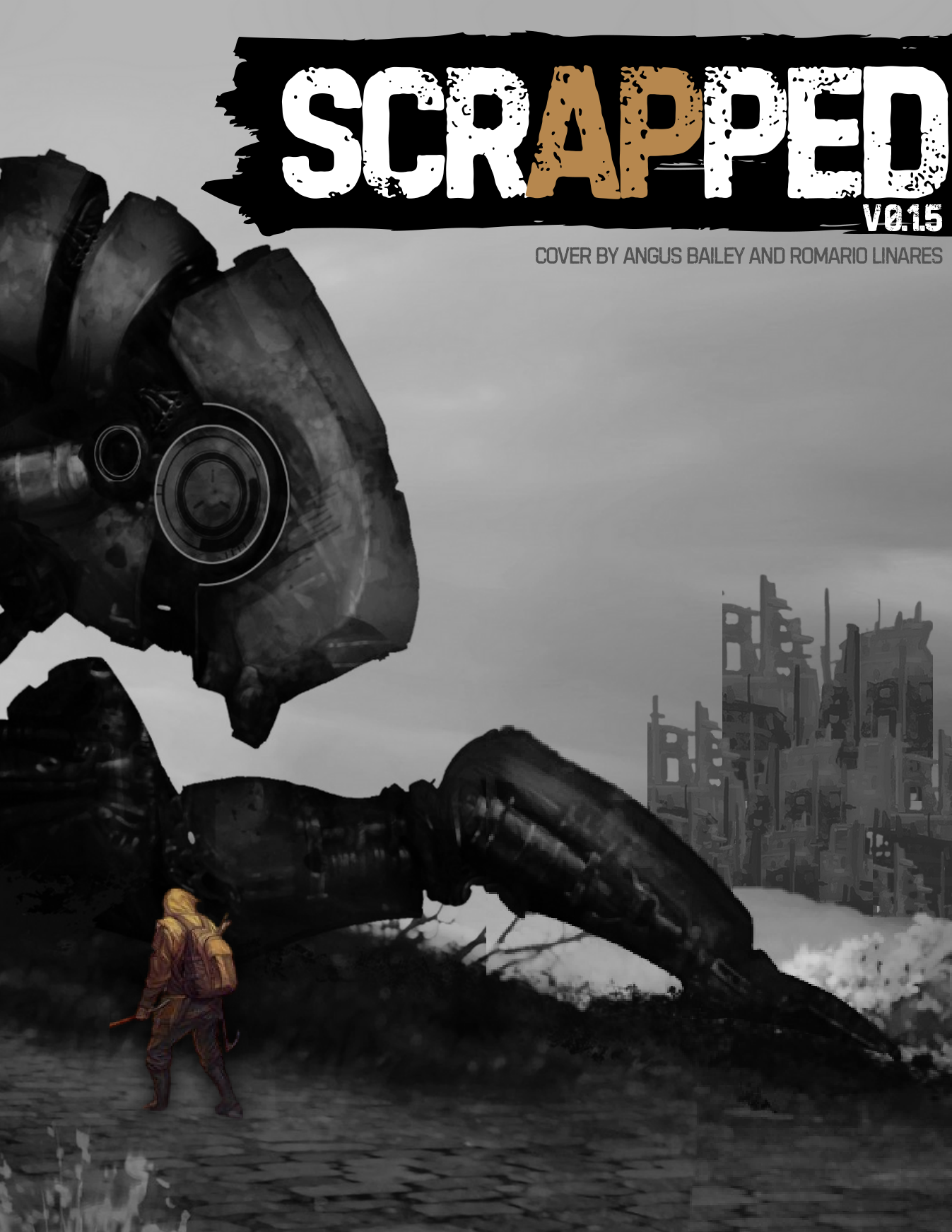
Scrapped starts from a blunt premise: humanity already lost, the world is wrecked, and the thing keeping you alive might also be the thing that turns you into a monster.
Survival games land harder when the rules make desperation mechanical.
The current prototype is available on itch.io.
What stands out here is how direct the pitch is. You are a Homunculus moving through a ruined future Earth full of automatons, mutant beasts, and remnants of a species that already failed. That is not background wallpaper. The whole system is written to keep that pressure close to the player.
Scrapped does not pretend scavenging is flavor text while the real game happens somewhere else. Carrying gear, losing gear, damaging your own slot economy, and deciding when to spend your last little edge are the game.
What Makes It Distinct
The best decision in the whole design is making the inventory do double duty.
Your filled base slots become TOUGH. Your empty base slots become AGILE. That means every piece of gear is a tradeoff between being equipped and staying fast. Damage also chews through those same slots, so attrition immediately changes what your character is capable of.
It is simple, readable, and mean in exactly the right way. You feel the survival layer because the sheet keeps forcing it back into every roll.
What Gives It Teeth
- Inventory slots acting as both carrying capacity and core stats
- SAVVY functioning as both resource pool and last line before Rampage
- Mutations offering real power while pushing you closer to losing control
- Fast d6 resolution that keeps combat ugly, lethal, and table-readable
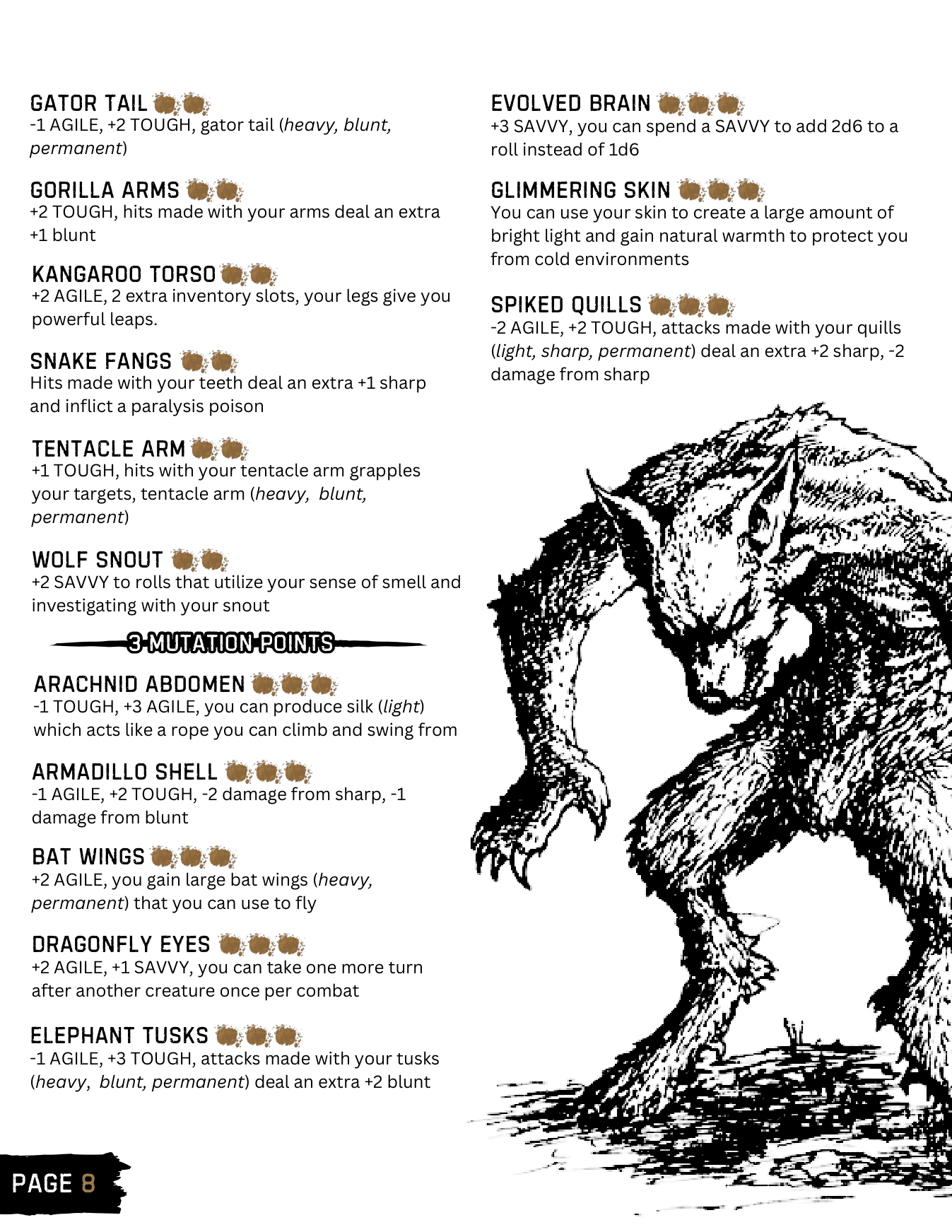
Guidebook spread: the game frames mutation as temptation, deterioration, and survival tech all at once.
The Core Loop Is Scarcity
Most post-apocalyptic games say resources are scarce. Scrapped makes that scarcity visible almost every time you touch the sheet.
You do not get to separate combat, gear, and identity into different subsystems.
Taking hits crosses out inventory slots. Spending slots for more dice gives you a short-term push at a long-term cost. Going empty on SAVVY flips you into Rampage. Those are exactly the kinds of connections that make a survival design work, because they stop the atmosphere from being decorative.
Pressure Points
- Damage reduces future options instead of only lowering an abstract health bar
- Interrupting in combat asks you to drop gear in exchange for speed
- Degrees of success stay quick while 1s actively poison good outcomes
- Rest, scavenging, and planning matter because the sheet keeps score
Mutations Are Not A Clean Upgrade Tree
They are useful because the world is horrible, and they are dangerous because the world is horrible.
That contradiction is the part worth preserving.
The mutation list is full of genuinely fun body-horror decisions: saber fangs, bat wings, gorilla arms, evolved brain, glimmering skin. The important part is that they are never just cosmetic loot. They change stats, create permanent gear, alter movement, and interact with the Rampage threshold.
That makes mutation feel like adaptation under pressure rather than fantasy character customization. It keeps the project ugly in a productive way.
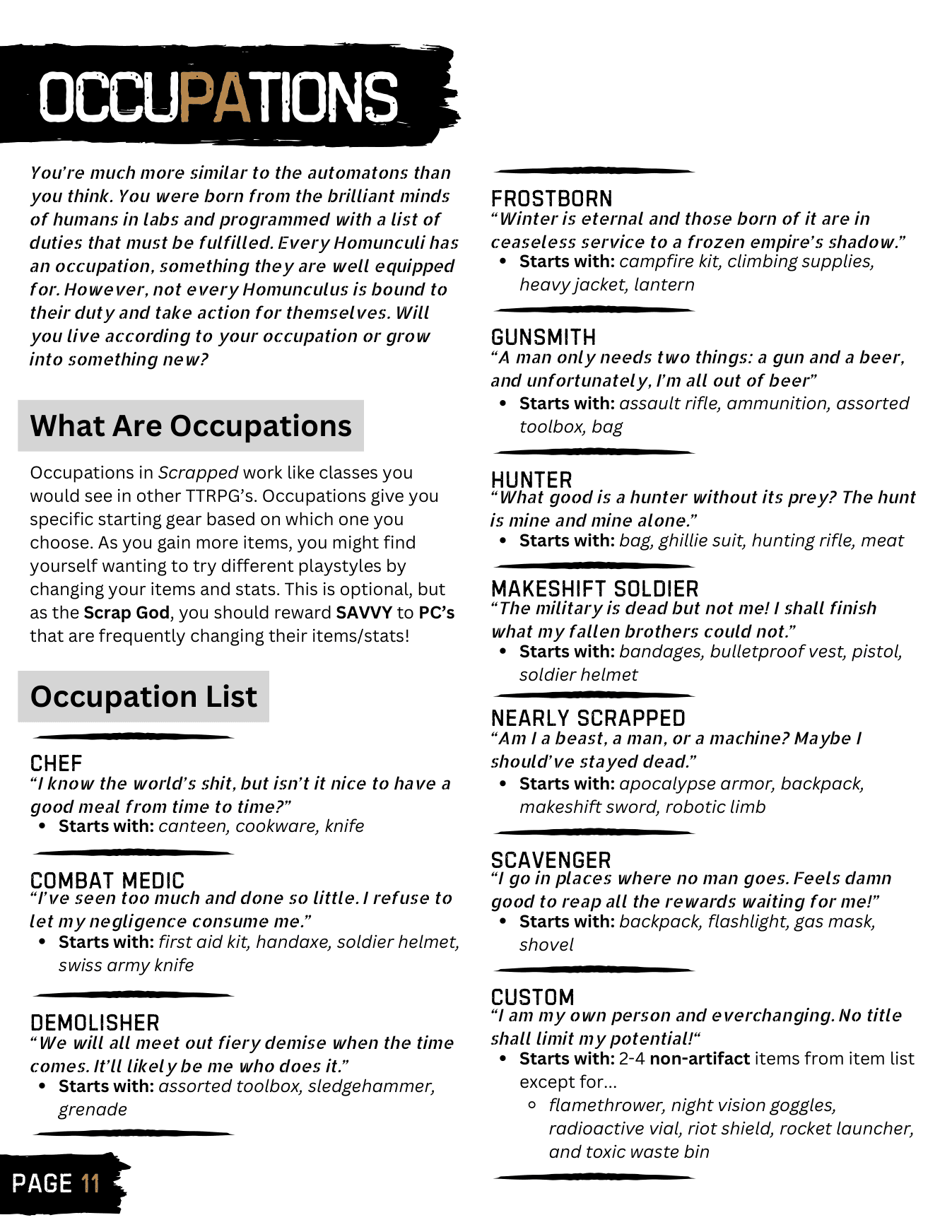
Occupations Keep The Opening Specific
Chef, Gunsmith, Frostborn, Nearly Scrapped, Demolisher. The project starts by giving players jobs, not abstract archetypes.
This grounds the character immediately in material reality. An occupation determines what you begin with, what problems you are prepared for, and what kind of ruined person you seem to be. It gives the opening table talk something concrete to grab onto before the world starts taking things away.
The Presentation Direction
The guidebook already knows what kind of object it wants to be: rough paper, heavy black linework, distressed typography, and the occasional rust-gold accent.
That visual restraint is part of the pitch.
Scrapped looks like something scavenged from the same world it describes. The best moments are not glossy. They feel printed, stamped, and dragged through the dirt a little. That is why this page leans into paper tones, soot-black panels, and scrap-metal highlights instead of trying to clean the project up into a polished product site.
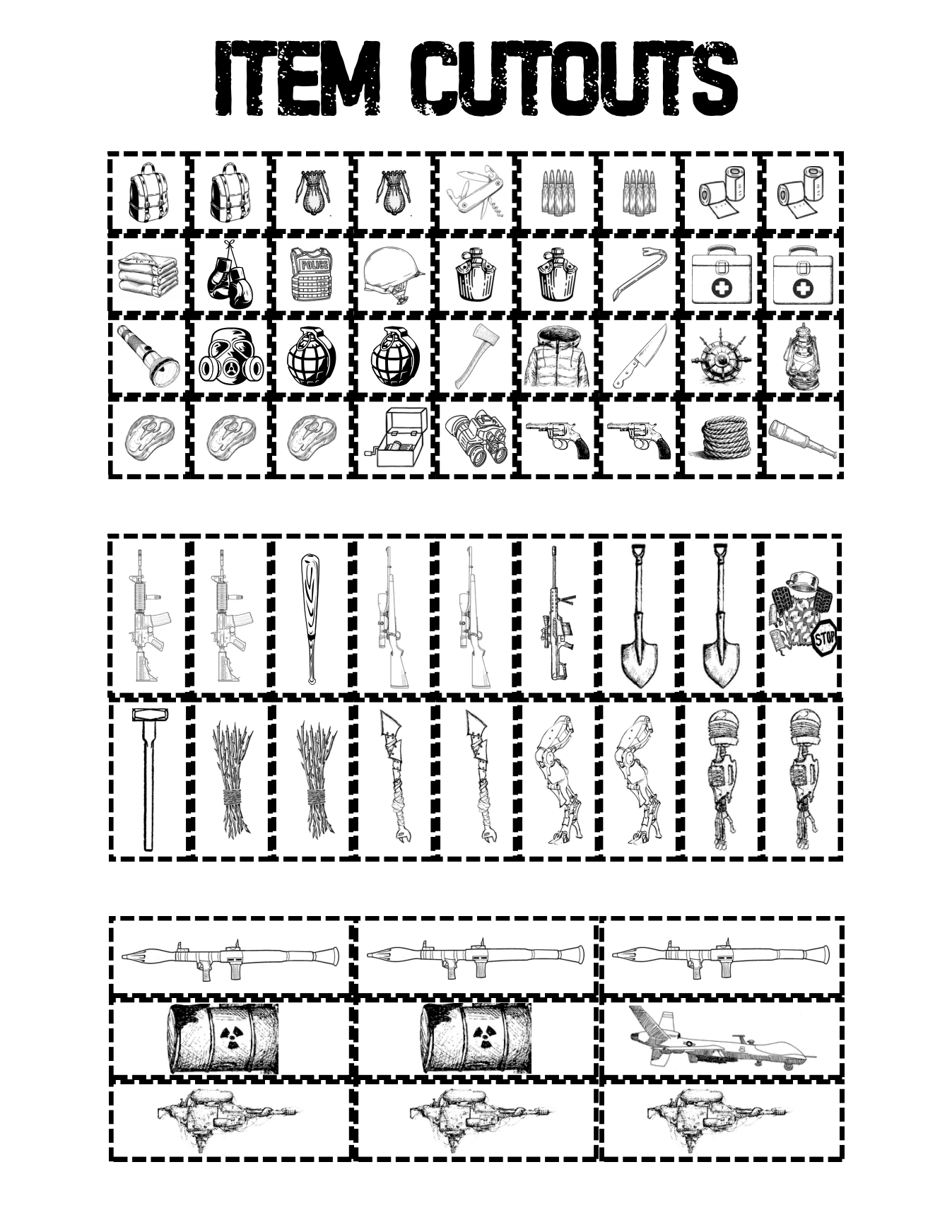
Artifact evidence: the physical item cutouts make the project feel tactile, cheap to stage, and easy to run at a real table.
What This Says About The Design
This project lines up with a strong design instinct: if the fiction is harsh, the rules should stop being polite.
Pressure matters more here than comfort.
Scrapped is a good example of a tabletop design approach with a clear point of view. It is not trying to be everyone's apocalypse game. It is trying to make scavenging, bodily deterioration, and ugly adaptation feel immediate and playable.
Current State
There is already enough here for the project to stand as a real prototype instead of a loose concept.
The important thing now is clarity, packaging, and whether the current pressure curve is exactly as cruel as it should be.
The guidebook, occupations, mutation catalog, foe structure, and table artifacts all prove the game exists beyond a pitch. From here, the useful work is refinement: tightening onboarding, testing scenario flow, and deciding which rough edges are intentional rather than accidental.
What Feels Established
- A complete enough rules loop to support real play
- Distinctive table props like item cutouts and character sheet tracking
- A setting pitch with clear hostility and tone
- Enough authored detail to show strong creative direction rather than placeholder genre dressing
The Short Version
"Scrapped works because it makes survival feel physical: every item, wound, mutation, and bad decision has to live somewhere on the body."